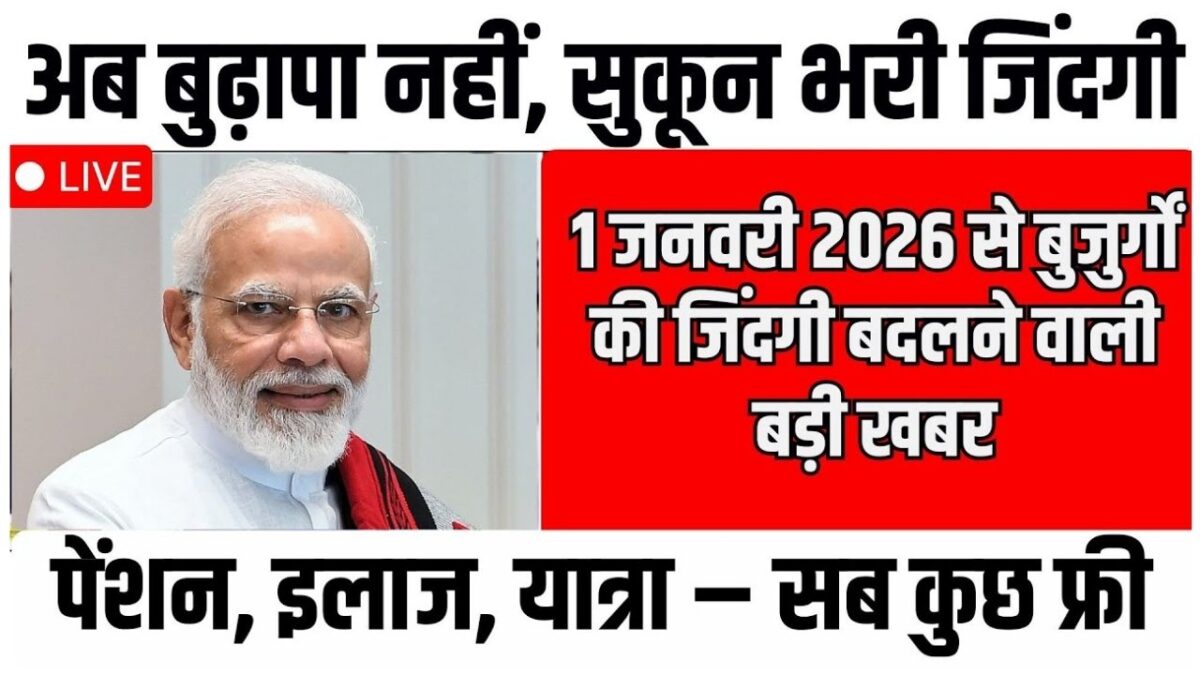
The Indian government has introduced revolutionary changes for the elderly under the Senior Citizen New Rules 2026. These updates aim to provide economic and social security, ensuring that individuals over 60 years old can maintain independence and dignity in fulfilling their needs. This historic decision is set to be effective nationwide in 2026, featuring enhancements in pension amounts and free medical treatments, directly benefiting elderly members of middle and low-income families.

These new regulations not only provide financial support but also implement crucial legal changes. Now, children who neglect to care for their elderly parents may face legal consequences. The government has also decided to prioritize healthcare, travel, and banking services for senior citizens. Let’s explore the seven key benefits included in these new rules.
Senior Citizen New Rules 2026: Major Changes for the Elderly
The beginning of 2026 will bring joy to senior citizens. The central government has strengthened the rights of seniors through the Maintenance and Welfare of Parents and Senior Citizens (Amendment) Bill. Furthermore, special concessions in pension and savings schemes have been announced.
Senior Citizen Scheme 2026 – Overview
- Scheme Name: Senior Citizen New Rules 2026
- Beneficiaries: Citizens aged 60 and 70 years and above
- Main Benefits: Increased pensions, free medical services, and legal protections
- Health Benefits: Free insurance coverage of ₹5 lakh to ₹10 lakh (Ayushman Bharat)
- Interest on Savings Schemes: 8.2% or higher (SCSS)
- Application Method: Online portal and government service centers
- Effective Date: January 1, 2026 (staggered rollout)
- Government Department: Ministry of Social Justice and Empowerment
1. Free Treatment of ₹5 lakh Under Ayushman Bharat
The government has launched the Ayushman Bharat Vay Vandana Card, allowing all elderly individuals over 70 years to receive free treatment up to ₹5 lakh. Notably, there are no income restrictions for families; thus, every senior citizen, regardless of wealth, benefits from government-provided health insurance.
2. Historic Increase in Pension Amounts
Under the National Social Security Revised Pension Scheme 2026, both state and central governments are working together to increase pension amounts. In various states, the minimum pension may range from ₹1,500 to ₹4,200. Additionally, further financial assistance is available for elderly individuals in the BPL category and widows.
3. Special Discounts on Rail and Bus Travel
To address travel issues faced by senior citizens, the Travel Discount rules are being reinstated. Discounts for railway tickets will be reintroduced, and government buses will offer a 30% to 50% discount, making it easier for seniors to undertake religious and personal journeys.
4. Enhanced Interest Rates on Savings Schemes (SCSS)
The Senior Citizen Savings Scheme (SCSS) now allows a maximum investment limit of ₹30 lakh. In 2026, seniors will continue to receive stable interest rates around 8.2% on their savings, significantly higher than standard fixed deposits, ensuring a consistent income every quarter.
5. Legal Protection and Right to Dignity
The new regulations grant enhanced authority to the Maintenance Tribunal. If children fail in their duty to care for their elderly parents, the tribunal may directly order deductions from their salaries for maintenance payments. The government acknowledges the “Life of Dignity” as a fundamental right for the elderly.
6. Substantial Tax Relief
In line with the new tax slabs for the financial year 2025-26, the limit for Standard Deduction for seniors has increased. Individuals with an income up to ₹12 lakh (pension and interest included) may see their tax liability reduced to zero. Additionally, no TDS will be deducted on interest up to ₹50,000 from bank deposits.
7. Priority in Banking and Government Offices
There will now be dedicated counters and queue arrangements for seniors in banks and other government offices. The Doorstep Banking service will also be encouraged to prevent elderly individuals from traveling to banks for tasks like pension withdrawals or submitting life certificates. The process for obtaining a digital life certificate (Jeevan Pramaan) will be further simplified.
Disclaimer
The information provided in this article is based on ongoing discussions, proposed bills (such as the Maintenance Amendment Bill 2025), and government announcements. While the Ayushman scheme for those aged 70 and over is already in place, discounts for train tickets and pension details are still topics of social media discourse and await official confirmation. Readers are advised to verify guidelines on official websites (like socialjustice.gov.in or pmjay.gov.in) before leveraging any scheme.
Frequently Asked Questions
What are the main benefits of the Senior Citizen New Rules 2026?
The main benefits include increased pension amounts, free medical treatment under Ayushman Bharat, enhanced interest rates on savings schemes, and legal protections for elderly citizens.
When will the Senior Citizen New Rules 2026 take effect?
The new rules are scheduled to come into effect on January 1, 2026, rolling out in various stages throughout the year.
Who qualifies for the benefits under the Senior Citizen New Rules 2026?
All citizens aged 60 years and above qualify for the benefits, with specific provisions enhanced for those 70 years and older.
How can senior citizens apply for the benefits?
Senior citizens can apply for benefits through an online portal and at designated government service centers across the country.
Are there any financial support provisions for BPL elderly individuals?
Yes, there are provisions for additional financial aid specifically for elderly individuals categorized as Below Poverty Line (BPL) and for widows.

